
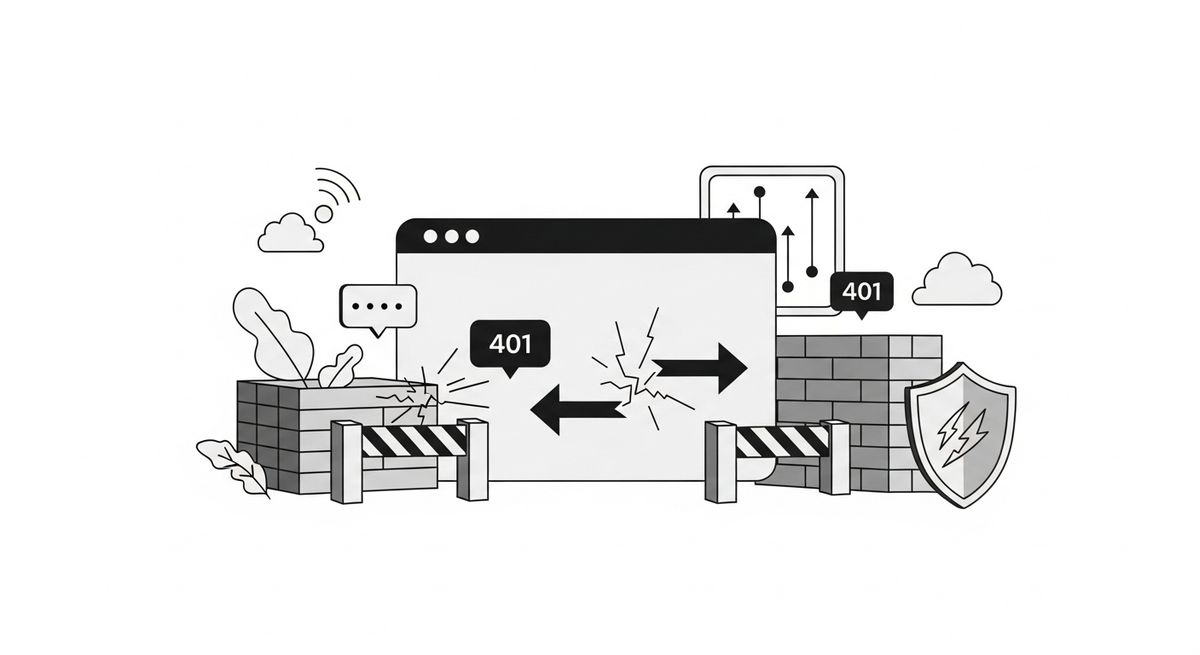
Why HTTP Automation Fails on Modern Websites
HTTP-based automation assumes websites are simple request-response systems. That assumption no longer holds.
Modern websites are applications. Treating them like APIs is why many automation setups appear to work at first, then fail silently in production.
The Web Is No Longer Request-Response#
Most modern sites rely on client-side rendering, hydration, and runtime JavaScript execution. The initial HTML returned by an HTTP request is often just a skeleton.
HTTP clients never execute:
- JavaScript
- Rendering logic
- Event-driven updates
If content appears only after scripts run, HTTP will never see it.
Client Logic Lives in the Browser#
Critical behavior now happens after page load:
- Tokens generated at runtime
- Dynamic headers and request signatures
- Encrypted or obfuscated payloads
These values are produced by JavaScript running in a real browser environment. Recreating them with raw HTTP requests is fragile and unreliable.
State Is Not Stateless#
Modern websites maintain state across:
- Cookies
- LocalStorage
- IndexedDB
- In-memory JavaScript variables
HTTP requests are isolated. Browsers are persistent. Many workflows depend on state that only exists after a sequence of real interactions.
Bot Detection Happens After the Request#
Most detection systems do not block the first request. They analyze behavior:
- Execution timing and ordering
- Script execution results
- Runtime environment fingerprints
HTTP tools can mimic headers, but they cannot reproduce browser behavior.
“It Works Sometimes” Is the Trap#
HTTP automation often works on:
- Simple pages
- Unprotected endpoints
- Examples built for tutorials
This creates false confidence. Small frontend changes or added protections can silently break everything.
When HTTP Still Makes Sense#
HTTP automation is valid when:
- A documented API exists
- The endpoint is static
- You control the service
Using HTTP against browser-only applications is a misuse of the tool.
Why Browser-Based Execution Works#
Browser-based automation succeeds because it executes websites the same way users do.
A real browser provides:
- A full JavaScript runtime
- Native handling of rendering and hydration
- Persistent state across navigation
- Natural execution of client-side logic
- Realistic timing and behavior patterns
Headless browsers deliver all of this without rendering a visible UI, making them efficient and scalable for most workloads.
Where Tools Like Doppelganger Fit#
Tools like Doppelganger exist to make browser-based automation practical at scale.
Instead of embedding fragile scripts or forcing everything into HTTP requests, these tools focus on controlled browser execution:
- Each task runs in an isolated browser environment
- JavaScript executes naturally without reverse engineering
- State persists across steps without manual handling
- Failures are easier to reason about because behavior matches real browsing
This approach reduces complexity. You stop chasing headers, tokens, and undocumented endpoints, and instead automate the site as it actually behaves.
Final Thought#
If a website were just HTTP, frontend engineers would not exist.
Modern automation works by running real browsers. Tools like Doppelganger exist to support that reality, not fight it.